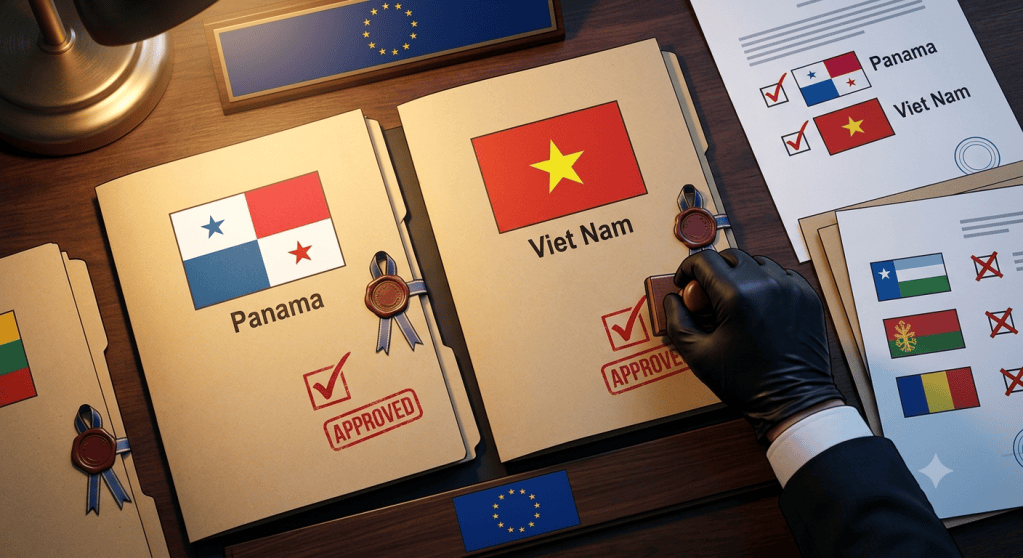
The European Union has updated its list of non-cooperative jurisdictions for tax purposes. The changes, announced on 9 October 2026, may be relevant to businesses with international subsidiaries, investments, or payments involving the jurisdictions concerned.
But what has changed, and what should businesses do next?
What has changed?
The EU maintains two lists:
- Annex I (the EU blacklist): Jurisdictions that do not meet the EU’s tax cooperation standards.
- Annex II (the grey list): Jurisdictions that have committed to addressing identified tax concerns or are still working towards meeting the relevant standards.
In its October 2026 update, the EU moved Panama and Viet Nam from Annex I to Annex II. Belize was removed from Annex II.
These changes reflect the EU’s assessment of the jurisdictions’ progress. They do not automatically determine how a business will be taxed.
How could this affect your business?
If your business has activities or arrangements involving a listed jurisdiction, consider reviewing the following areas.
1. Payments between countries
Does your business pay or receive dividends, interest, royalties, or other amounts involving a listed jurisdiction?
Check whether the relevant country’s tax rules impose additional withholding taxes, restrictions on deductions, or other conditions for payments involving that jurisdiction.
2. Your international company structure
Does your group operate through subsidiaries, holding companies, or financing entities in different countries?
Review whether the listing status affects any special tax rules that apply to your structure. The answer will depend on the countries involved and the nature of the arrangement.
3. Tax reporting requirements
Some businesses may have additional reporting or disclosure obligations because of their cross-border arrangements.
Check whether your existing reporting procedures remain appropriate and whether any new requirements apply.
4. When the changes take effect
The announcement date is not necessarily the date on which every tax consequence changes.
Confirm the formal effective date and check the rules applicable in each relevant country before changing how your business treats a transaction.
What should businesses do now?
A practical review can start with four steps:
- Identify subsidiaries, investments, and payments involving jurisdictions on the EU lists.
- Check the tax rules in the countries where your business operates.
- Confirm whether any withholding tax, deduction, reporting, or other requirements are affected.
- Update your tax compliance procedures if necessary.
Not every business with a connection to a listed jurisdiction will face additional tax. The outcome depends on the applicable national rules and the specific facts.
How Tax Panorama can help
International tax rules can affect the way businesses structure their operations, move money between countries, and meet their reporting obligations.
Tax Panorama provides international tax guidance to help businesses understand these issues and assess their cross-border arrangements.
If your business has subsidiaries, investments, or transactions involving jurisdictions on the EU tax lists, a targeted review can help identify which rules apply and whether any action is needed.


Leave a Reply