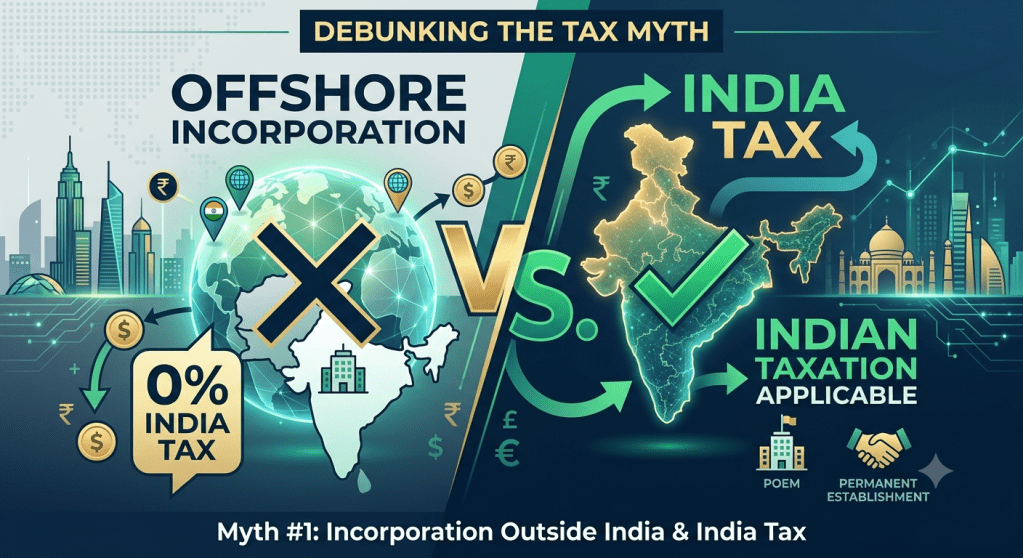
This is the first in a series where I break down some of the most common misconceptions I come across in international tax planning. If you’re exploring an offshore structure — or already run one — this is worth five minutes of your time.
Some version of this belief comes up in nearly every conversation I have with clients and prospects.
Social media is full of content pitching offshore incorporation as a tax shortcut. It’s an easy story to sell, and an easy one to believe — but it glosses over most of the real risk involved.
Where you incorporate is just one piece of a much bigger puzzle. Before anyone acts on this idea, they should be asking the following questions.
Where Is the Company Actually Being Run From?
It’s natural to assume a company is taxed wherever it’s incorporated. But most tax authorities look past the certificate of incorporation — they look at where the real decisions get made, where management sits, where the board actually meets.
For example: say you incorporate a U.S. LLC but run it entirely from India. You could end up triggering something called “place of effective management.” If that’s found to be India, your U.S. LLC’s profits could be taxed there too.
Where Do Your Customers and Operations Actually Sit?
Doing business in a country can mean owing tax there, regardless of where your company is registered. If your U.S. LLC sells to customers in Germany, German tax rules may well apply.
Are You Unintentionally Creating a Taxable Presence Elsewhere?
Staff, offices, and on-ground activity can all create tax obligations you never set out to create. If your U.S. LLC has employees working from India, that alone can create a taxable presence (permanent establishment) for the company in India.
Can You Actually Keep Up With the Compliance?
Cross-border structures come with cross-border paperwork — multiple filings, multiple accounting standards, multiple deadlines, often across several countries at once. Selling products into Germany through your U.S. LLC, for instance, could bring VAT obligations with it.
Does the Structure Actually Serve the Business — Or Just the Tax Bill?
A good structure should fit your commercial plans, your investors, and where the business is headed. If tax avoidance is the sole reason for the structure, it’s likely to draw scrutiny rather than save money.
The Bottom Line
International tax planning isn’t about chasing the lowest possible rate. It’s about building something that holds up commercially, legally, and practically in every jurisdiction you touch.
There’s no one-size-fits-all answer. What works for one business can be entirely wrong for another — it comes down to the specific facts, the countries involved, and the rules that apply.
Have a Cross-Border Structure — or Planning One?
If you’re setting up or already running an international structure, it’s worth getting a second opinion before the compliance gaps become expensive.


Leave a comment