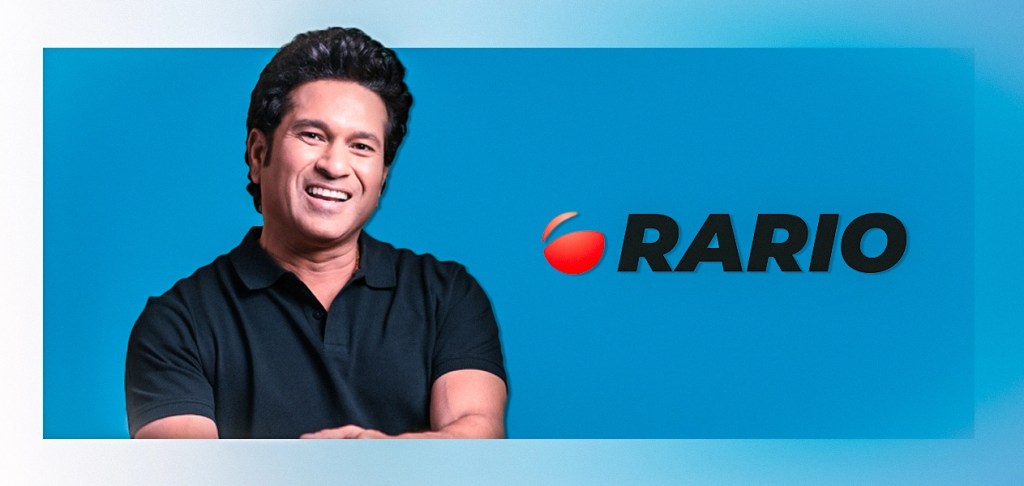
The Consumer Online Foundation has written to Finance Minister Nirmala Sitharaman to investigate the business activities of company Rario and its compliance with Indian taxation laws with respect to virtual digital assets and crypto currency and anti-money-laundering (AML) laws.
About Rario:
Rario refers to itself as the world’s first and largest licensed digital cricket collectible platform, dedicated to bringing the fans closer to the sport like never before. In reality, Rario is an NFT and cryptocurrency platform, a fact which is not obvious to a visitor to their website.
Rario refers to itself as a company engaged in the buying and selling of Digital Player Cards. Indian cricket fans form the majority of its consumers. By its own admission in a press release dated March 20, “Rario has sold over 1.3 million player cards to cricket fans”, which is a phenomenal number in such a short span of time.
Rario counts cricket legend Sachin Tendulkar as its strategic investor.
How Rario’s business operation is problematic, as per the accusation?
1. Using Low Tax Jurisidictions:
Rario’s parent company Digital Collectibles Pte. Ltd. is based out of Singapore whose Indian wholly-owned subsidiary, Rario Digital Private Limited is located in New Delhi. This is an interesting arrangement for the entities to circumvent the Indian laws to park monies overseas.
Rario violated the applicable taxation provisions of virtual digital assets and crypto currency in India. It is observed that in all transactions in Rario the consumers are misled in a deceptive manner by adopting unethical marketing practices, which are not only deemed as unfair trade practices but also violating the rights of the consumer.
2. Violation of Anti-Money Laundering Laws
Rario’s current KYC processes tantamount to violation of anti-money-laundering (AML) laws of the country. As per the Finance Ministry recent notification, entities dealing in virtual digital assets (VDAs) will now be considered ‘reporting entity’ under the Prevention of Money Laundering Act (PMLA) and need to maintain KYC details or records of documents evidencing the identity of its clients and beneficial owners as well as account files and business correspondence relating to its clients.
3. Violation of FEMA Regulations
Rario is facilitating International transactions under the Liberalized Remittance Scheme (LRS) of the Foreign Exchange Management Act (FEMA) 1999, without any limits on the transactions. This is a concern under FEMA Regulations with money going outside India without using authorized routes like LRS, which lays down the guidelines for outward remittance from India.
4. Using Prominent Crickets to mislead Cricket fans
Rario is also using celebrities like prominent cricketers Tendulkar, Smriti Mandhana, Cheteswar Pujara and others to mislead and lure millions of innocent and vulnerable cricket fans to buy and sell player-cards on its platform in an unethical and illegal manner, Mishra said.

 International Tax Panorama
Leave a comment