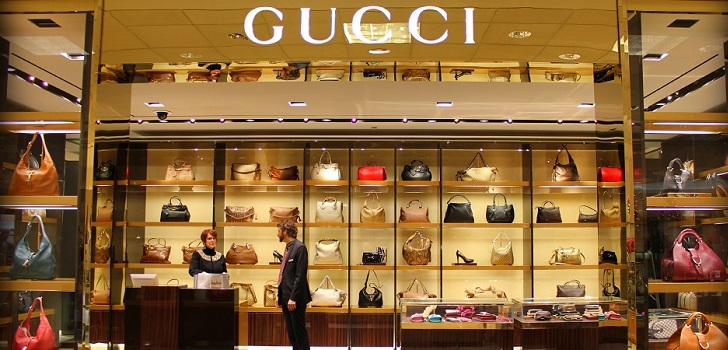
On 9th May Kering announced that the Group has concluded a settlement with the Italian Revenue Agency relating to claims vis-a-vis its Swiss subsidiary Luxury Goods International S.A. (LGI). The total required payment €1.25 billion (£1.07 billion), is the largest settlement ever agreed by a company with the Italian tax authorities.
According to Reuters –Kering, the Paris-based luxury goods conglomerate, which owns Gucci, Saint Laurent, Balenciaga, and Bottega Veneta, among other brands – has denied avoiding taxes, but “by agreeing to a settlement has spared itself of having to pay even more interest and sanctions for late tax payments.”
The settlement, concluded after in-depth analysis and with a collaborative spirit, acknowledged that the claims raised during the tax audit regard both the existence of a permanent establishment in Italy in the period 2011-2017 with the associated profits, and the transfer prices applied by LGI in the same period with its related party Guccio Gucci S.p.A..
Clampdown by Italian Tax Authorities on Fashion Giants:
Over the past few years The Guardia di Finanza – Italy’s financial authority – has focused on the use of foreign European subsidiaries through which Italian companies, particularly in the luxury sector, have allegedly masked profits. Switzerland, Ireland, and the Netherlands have always emerged as the favourite destinations, with strategies such as the “Dutch sandwich” and the “double Irish.”
As a result, a slew of big-name Italian fashion figures became the targets of Italian tax evasion crackdowns over the past several years. A series of investigations began in 2014, with a probe into Prada’s decade-long tax avoidance totalling €470m being among the most high-profile. Chief executive Miuccia Prada and her husband and joint chief executive Patrizio Bertelli later paid an estimated €420m in a settlement. Giorgio Armani was also forced to pay €270m in 2014 over a tax dispute involving overseas subsidiaries. Meanwhile in the same year, fraud convictions against Domenico Dolce and Stefano Gabbana, the celebrated founders of Dolce & Gabbana who had been facing jail for allegedly avoiding paying €1bn, were overturned.
Kering Tax Settlement: How did it all started?
Investigation by French media Mediapart :
The Italian investigation into Gucci followed a probe made by French media organisation Mediapart in 2017, in collaboration with the European Investigative Collaborations investigative journalism network. The Mediapart’s Probes revealed the following tax avoidance scheme used by Kerring group :
- The earlier probes in 2017 revealed that the tax avoidance scheme involved Gucci in relation to the remuneration of Gucci’s CEO Marco Bizzarri and his predecessor Patrizio di Marco, involving a Luxembourg-based company and a tax domicile in Switzerland.The Tax domicile in Switzerland references to Luxury Goods International subsidiary (“LGI”), the Swiss subsidiary of Kering group. It specialised in distribution and logistics services for many of the group’s labels based in Lugano, in Switzerland’s Ticino canton.
- Tax avoidance scheme via Swiss subsidiary: In March 2018 Mediapart and Germany’s Der Spiegel reported that its team had seen “confidential documents” that revealed that Gucci, according to Mediapart’s estimations, failed to play 2.5 billion euros ($3.1 billion) in taxes in Italy and France “by attributing wholesale revenues from brands including Gucci and Yves Saint Laurent to its LGI logistics center in Cadempino, Switzerland, thereby benefiting from a lower local tax rate“. It was done through relocation of 20 employees from its French or Italian offices to LGI in Switzerland “as part of the tax optimization scheme, but alleged that some of them continued to effectively work in Italy.”, according to Mediapart. This way companies tend to be subjected to a more favourable tax regime in Switzerland than in Italy, even though the employees effectively operated from Italy.
Was the LGI logistics center a mere tax optimisation scheme?
In defence Kering said that the Swiss company was established in the Nineties, prior to the group’s acquisition of Gucci Group, and now employs more than 600 people. LGI is a strategic hub namely for the centralized distribution and logistics of Kering brands it said in a statement. All of the group’s companies established in Switzerland carry out tangible business activities. As a result, the group pays its due taxes in Switzerland, in compliance with the law and the fiscal status of the company. This business operating model is known by French and other competent tax authorities, it added.
Allegations by the Public Prosecutor : Milan’s public prosecutor’s office concluded its investigation in November 2018, opening the way for a formal request for trial. The Italian court suspected the luxury company to have paid taxes on profits made in Italy in another country with a more favourable tax system. It was alleged that Gucci in particular, the group’s flagship brand, accumulated revenues which should have been taxed in Italy and not in Switzerland, as they were recorded via the logistics and distribution platform Luxury Goods International (LGI), which is based in Switzerland and is used by most of Kering’s brands.
The Audit team result: The audit unit of the Italian tax authorities “completed a tax audit” in connection with their investigation “pertaining to [Gucci’s] tax matters in Milan,” and found that “Luxury Goods International, a Swiss subsidiary of Kering, conducted business activities in Italy which should have resulted in payment of Italian corporate taxes.” Thus the audit revealed that Kering had saved 2.5 billion euros in taxes that it should have paid in Italy and France by attributing wholesale revenues from brands including Gucci and Yves Saint Laurent to its LGI logistics center in Cadempino, Switzerland, thereby benefiting from a lower local tax rate.
Other alleged tax avoidance schemes, according to Mediapart’s reports: Apart from revelations on Swiss subsidiary the Medipart’s report asserts that Kering operates subsidiaries in the Netherlands and Luxembourg as shell companies to benefit from tax breaks. Mediapart also stated that, following the acquisition of Gucci in 2000, Kering extended the system conceived by the Italian company to all of its luxury brands outside of its jewellery division, including French labels Balenciaga and Yves Saint Laurent.
The website further claimed that Saint Laurent alone had evaded around 180 million euros in taxes in France. Further Mediapart cited “new confidential documents” in Jan 2018, which had been shared with the European Investigative Collaborations (EIC) media network to claim that Kering had “saved on 50 million euros in taxes by paying the former boss of Gucci in Panama,” referring to Patrizio di Marco, who led the Italian brand from 2008 to 2014.
Follow up Swiss inquiry:
The Italian fiscal authorities’ investigation into an alleged instance of tax evasion by French luxury group Kering is also facing investigations in Switzerland. At any rate, this is what some members of parliament for the Swiss Ticino canton are advocating, having lodged a formal complaint about the “fictitious domicile of former Gucci CEO Patrizio di Marco,” according to a report by Swiss news agency ATS on 25 march 2019.
Mediapart followed up on the matter and, in an article dated March 21, wrote that the Swiss cantonal MP “filed with the Lugano prosecutor, on Wednesday, a criminal complaint against the CEO of Gucci, Marco Bizzari, and his predecessor, Patrizio Di Marco.” Pronzini and his party, MPS, claimed they have incriminating documents against Gucci’s senior managers, accusing them of having obtained fiscal domicile in Ticino. According to Mediapart, the group has facilitated this operation.
The matter is also being investigated at federal level in Switzerland. Last year, the Swiss Confederation’s Public Prosecutor’s office said that criminal proceedings, in connection with the Italian investigation of the Kering group, had indeed been initiated, regarding alleged crimes of money laundering and document forgery.
Further Investigations in Italy:
While the François-Henri Pinault-led group will be out from under the microscope of Italian tax authorities as a result of the settlement, Gucci’s current CEO Marco Bizzarri and former CEO Patrizio Di Marco remain under investigation in the case, “in their capacity as legal representatives of the company,” Kering confirmed on Thursday. Per Reuters’ sources, “That investigation is expected to lead to a separate settlement once Kering starts paying the money to tax authorities.”
Conclusion:
It seems that the tax optimisation schemes by Fashion Giants needs to be revamped in the wake of intense crackdown by tax authorities. This may be due to the fact that theses strategies no longer act as defence mechanism against any tax avoidance motive, post OECD’s BEPS (Base erosion and profiting shifting) project. The OECD’s BEPS project has led to intense crackdown on such multinationals since 2013 and watered down these companies’ defence strategy resting on “Tax Optimisation”.

 International Tax Panorama
Leave a comment